


Cardiovascular Physical Therapy Laboratory (LFCV)/Physical Exercise Research Center (NUPEF)
Lab Coordinator: Aparecida Maria Catai, Ph.D.
Research Line in PPGFt: Cardiorespiratory Physiotherapy and Exercise Physiology
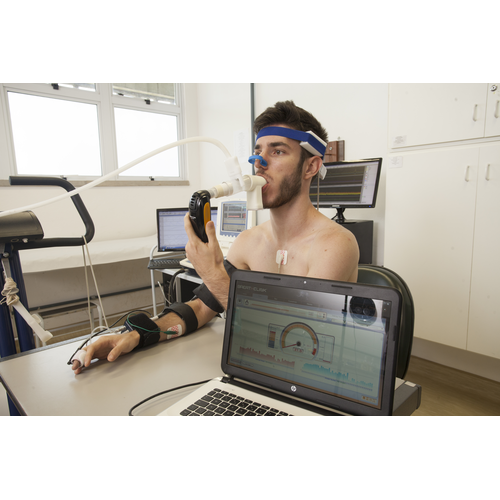
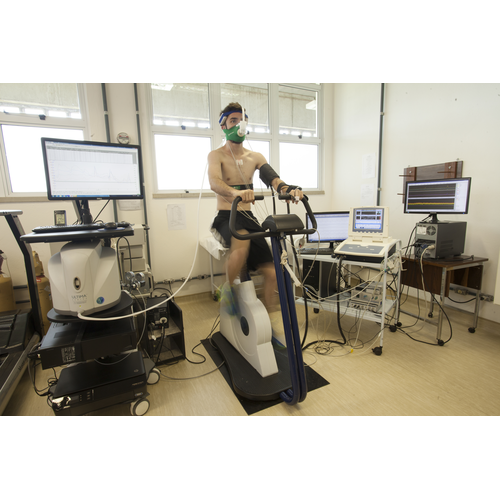
This laboratory conducts research related to the assessment and intervention in outpatient and hospital-based cardiovascular physiotherapy for patients with cardiovascular diseases (CVD), respiratory and metabolic diseases, individuals with risk factors for CVD, as well as athletes and healthy individuals. The main objectives of the research are to evaluate physiological adjustments and adaptations to different stressors (Valsalva maneuver, respiratory sinus arrhythmia maneuver, passive and active postural maneuvers, and different physical exercise and training protocols), as well as to analyze biological signals, particularly cardiovascular, respiratory, autonomic, metabolic variables, and functional performance.
The main ongoing research projects include:
- Impact of inspiratory muscle training and aging on metabolic mapping and autonomic modulation at rest and on cardiovascular, respiratory, and metabolic responses to physical exercise in healthy men (FAPESP Thematic Project);
- Exploring machine learning techniques for modeling the aerobic system during dynamic physical exercise and its potential applications in cardiorespiratory rehabilitation programs;
- Acute effects of photobiomodulation therapy on the aerobic system in type 2 diabetes mellitus (CNPq Universal);
- Effect of hydrotherapy on the functionality of patients with Parkinson’s disease: a randomized controlled clinical trial (MCTIC/FINEP/CT-INFRA 04/2018 – Process 0363/2018).
The laboratory develops research in collaboration with national and international partners. International collaborators include: Prof. Dr. Alberto Porta (Italy), Prof. Dr. Nicola Montano (Italy), Prof. Dr. David Nieman (Appalachian State University, USA), Prof. Dr. Richard L. Hughson (University of Waterloo, Canada), and Prof. Dr. Uwe Hoffmann (Germany).
National collaborations include: FAMERP (Prof. Dr. Moacir de Godoy), USP/Ribeirão Preto (Prof. Dr. Ana Cláudia Mattiello Sverzut), UNESP – Presidente Prudente (Prof. Dr. Luis Marques Vanderlei and Prof. Dr. Carlos Marcelo Pastre), UPE – Petrolina Campus (Prof. Victor Ribeiro Neves), UFPE (Prof. Dr. Daniela Cunha Brandão and Prof. Dr. Armèle Dornelas), USP São Carlos (Prof. Dr. Vanderlei Bagnato), UNICAMP – Limeira (Prof. Dr. Fúlvia de Barros Manchado Gobatto), UFSCar – Department of Physiotherapy (Prof. Dr. Patricia Driusso, Prof. Dr. Thiago Russo, Prof. Dr. Ana Beatriz de Oliveira, Prof. Dr. Audrey Borghi-Silva, Prof. Dr. Renata Mendes, Prof. Dr. Anielle C. M. Takahashi, Prof. Dr. Maurício Jamami, Prof. Dr. Valéria Pires Di Lorenzo, Prof. Dr. Paula Serrão, and Prof. Dr. Fabio Viadanna Serrão), UFSCar – Department of Medicine (Prof. Dr. Meliza Gói Roscani), UFSCar – Department of Physiological Sciences (Prof. Dr. Heloisa S. S. de Araújo), and UFSCar – Department of Chemistry (Prof. Dr. Gilberto Ferreira, Prof. Dr. Tiago Venâncio, and Prof. Dr. Regina Oliveira Vincenzi).
Infrastructure:
The laboratory has an area of 75 m², divided into two assessment rooms, one data processing room, and one shared room for disinfection of materials. It is equipped with four ergometers (three Corival cycle ergometers and one Inbramed Master ATL treadmill), two metabolic carts (Ultima Medgraphics and VMax Encore 100 – Sensormedics), one Cardioperfect system coupled to the Ultima metabolic cart, one Cardioseries system (for 12-lead ECG acquisition) coupled to the VMax, one pulse plethysmography system (Finometer Pro), two signal acquisition systems (PowerLab 8/35, Bio Amp FE132 – ADInstruments), one ML320 oximeter (ADInstruments), one Schiller electrocardiograph, one Wincardio system, manovacuometers, heart rate monitors (Polar), one near-infrared spectroscopy system (NIRS, Oxymon), one Alfamed oximeter, one fingertip pulse oximeter, and 35 smart shirts with sensors (Hexoskin).
Funding:
FAPESP, CNPq, and CAPES.
Extension Activities:
The results of the research conducted have contributed to identifying characteristics and mechanisms related to chronic cardiovascular and respiratory diseases and their risk factors. The laboratory also evaluates adjunct resources for cardiovascular physiotherapy interventions, applied as extension activities, for example, in collaboration with USE-UFSCar or directly with the community, in addition to developing assessment software.
It is noteworthy that various types of evaluations, physical and laboratory tests, and physical training programs are offered to participants of research projects linked to the laboratory, who are recruited from the community.
LCVF-NUPEF is a pioneering group in Brazil in the analysis and processing of biological signals and methodologies for linear and nonlinear analysis of cardiovascular autonomic modulation, as well as in cardiopulmonary exercise testing with emphasis on cardiovascular, ventilatory, and metabolic diseases and the aging process before and after physiotherapeutic interventions and the application of adjunct resources.
Instagram: @lcvf.nupef